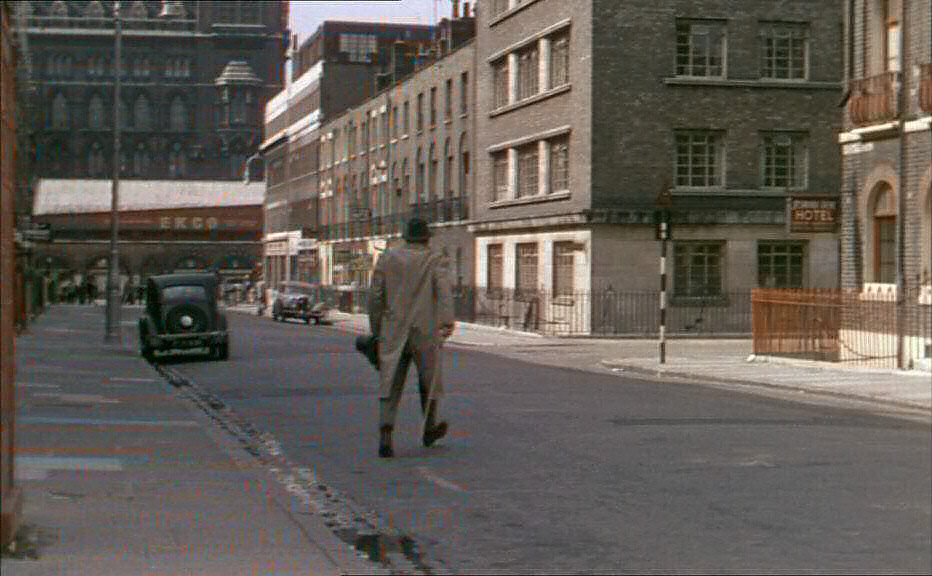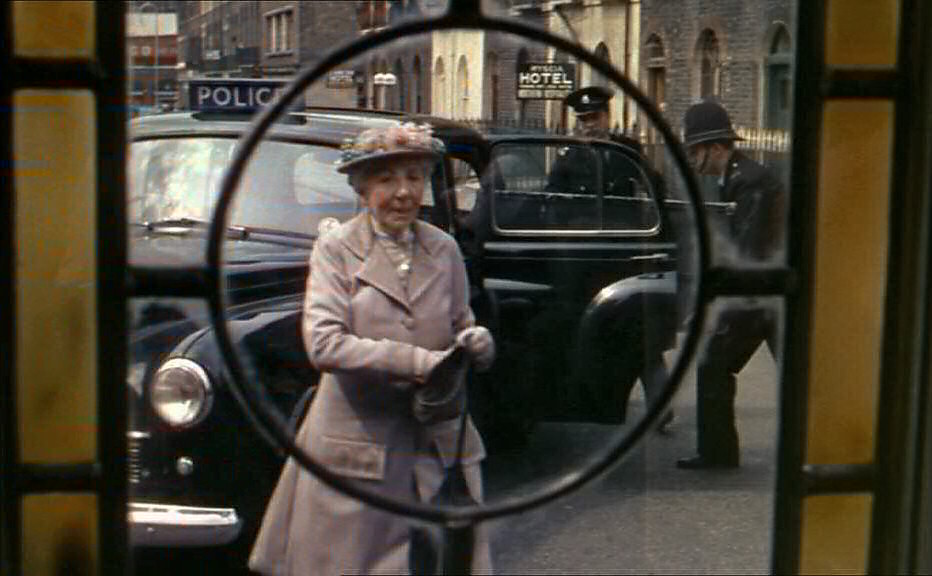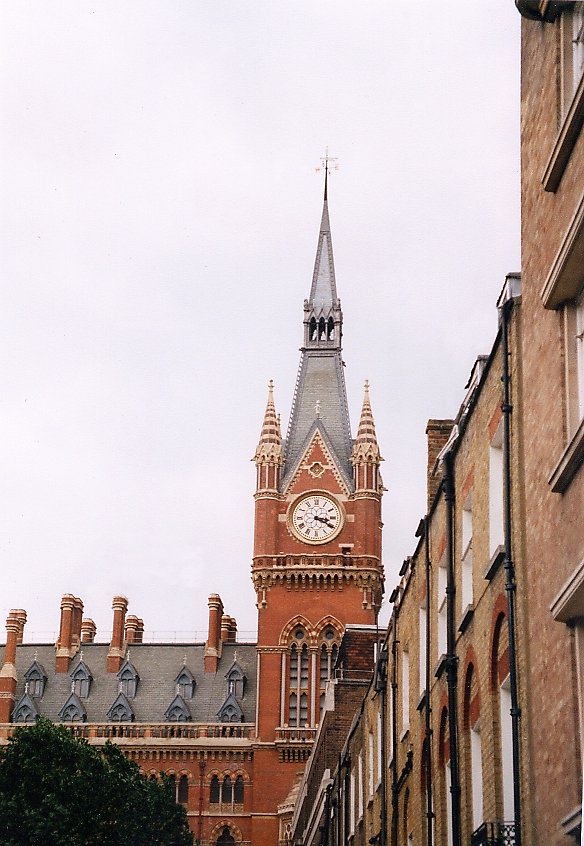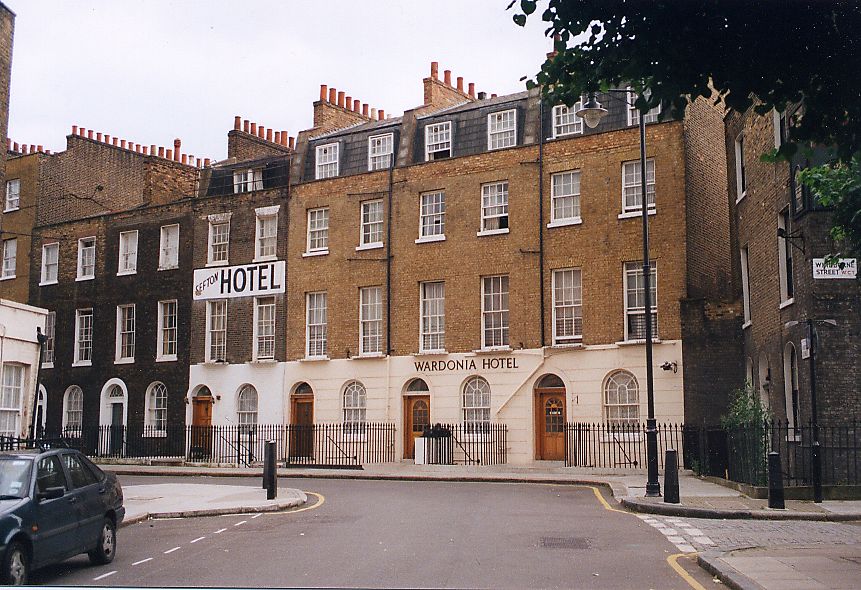
“The Ladykillers” (Ealing Studios, 1955) – locations, then and now
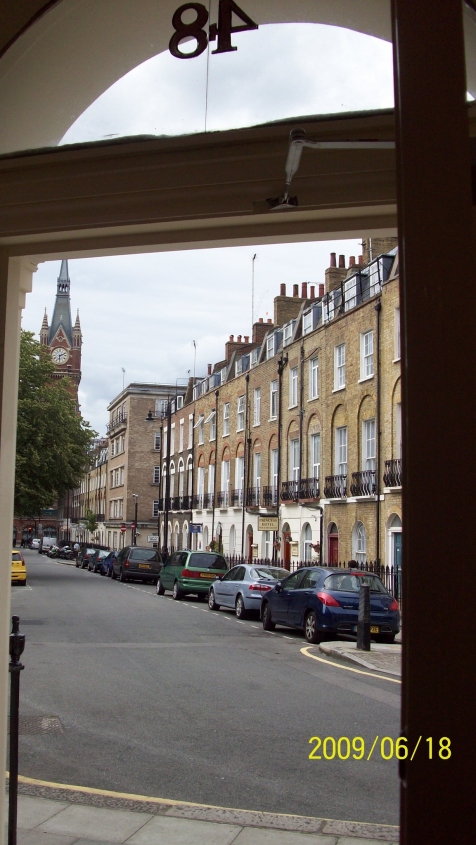
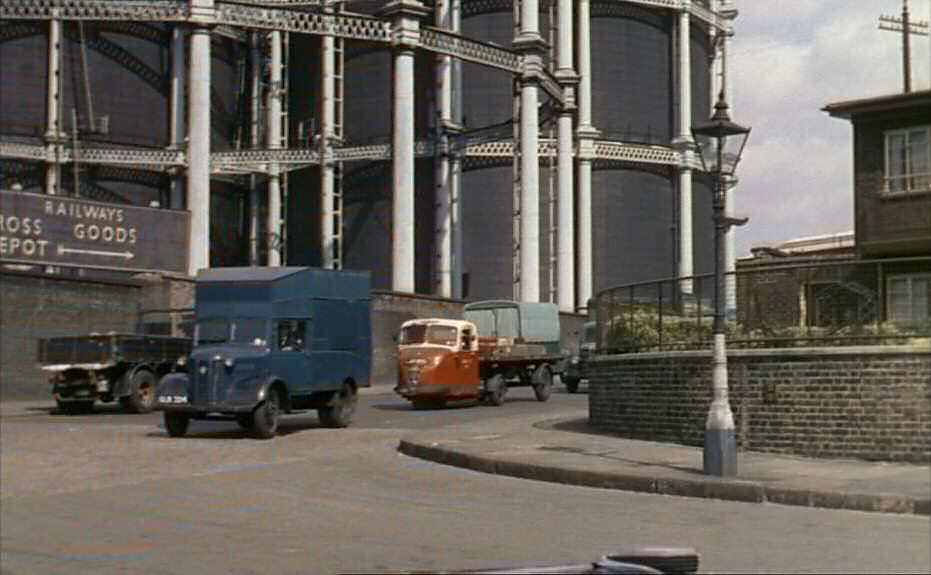
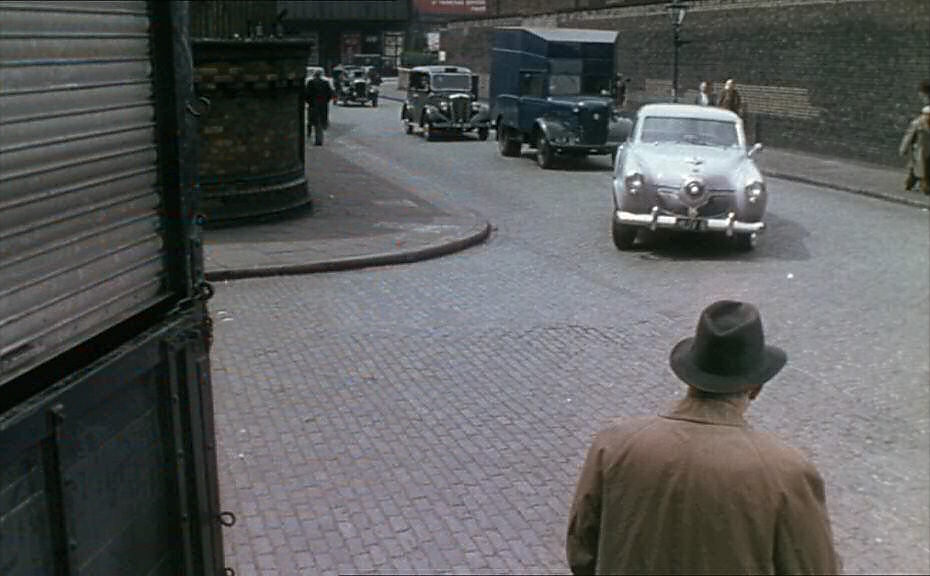
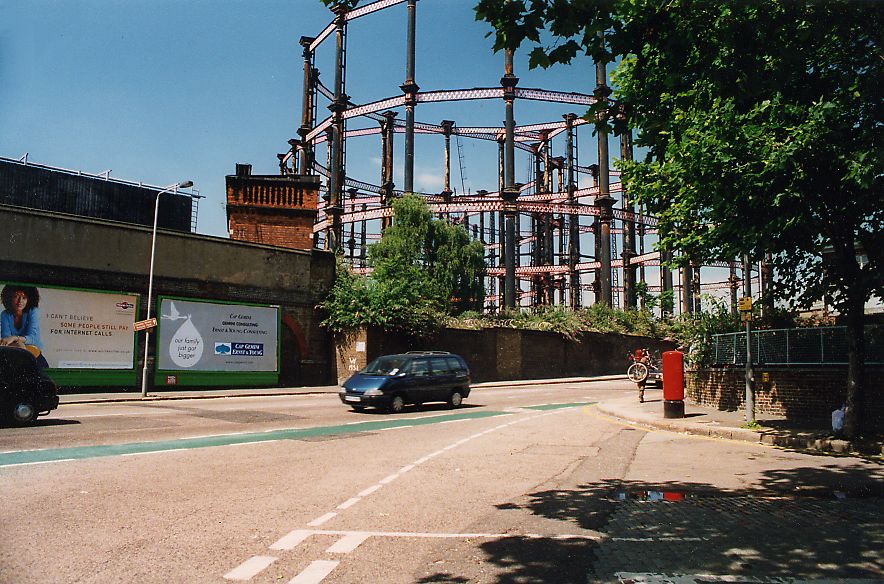
This page shows pictures from the 1955 film “The Ladykillers”, with comparable modern-day pictures. Each of the pictures on this page is a link to a larger version of the picture (size: 100–150 KB).
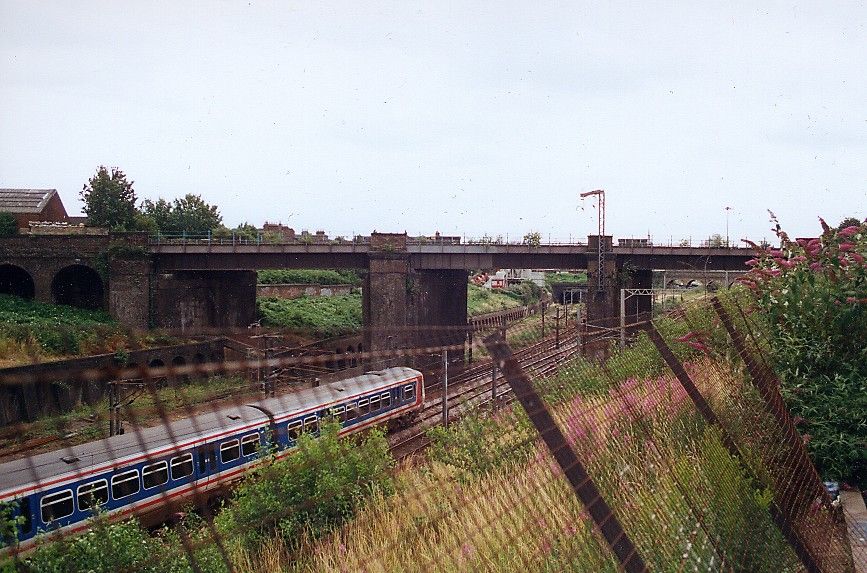
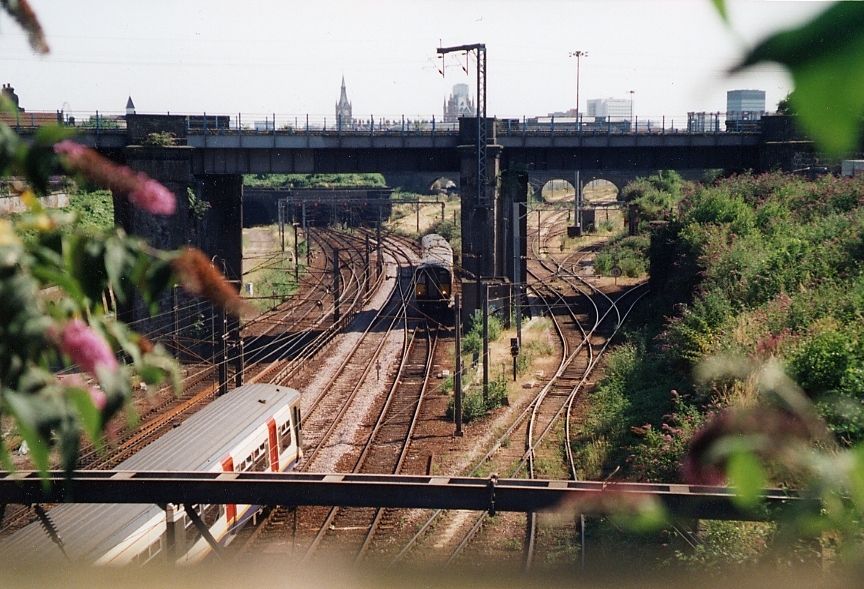
I was inspired to produce this then-and-now photo-record after going on a guided walk of the area which was organised by the Sir Nigel Gresley Preservation Trust in August 1999. It also serves as a record of the area before it was changed considerably as a result of the construction of the Channel Tunnel Rail Link (CTRL).
See also Reel Streets, a site by John and Brian Tunstill which identifies locations used in British films from the 1920s to the 1980s. The locations for The Ladykillers are described here.
|
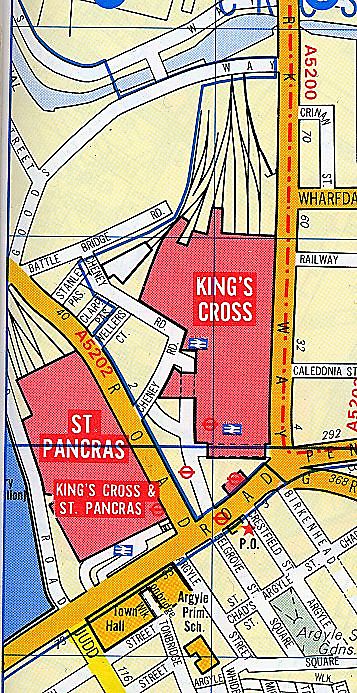
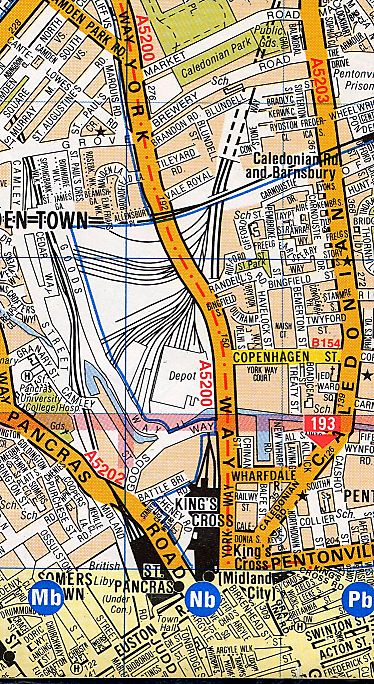
This is a large-scale map of the area close to King’s Cross Station. Cheney Road (formerly Cheney Street), where the robbery took place, is immediately west of the station. Argyle Street, used for the view from Mrs Wilberforce’s front door, is south-east of St Pancras Station. It shows the road layout from the 1980s, before the Channel Tunnel Rail Link (CTRL) work on St Pancras Station changed the area. Map reproduced by permission of Geographers’ A-Z Map Co. Ltd. © Crown Copyright 2007. All rights reserved. Licence number 100017302. See also street map (Streetmap) and the top-down and bird’s eye (oblique) aerial photographs (Bing) of King’s Cross and St Pancras Stations. In the photographs, the large semi-circular building on the west side of the station is a new entrance hall which occupies the site of Cheney Road. |
|
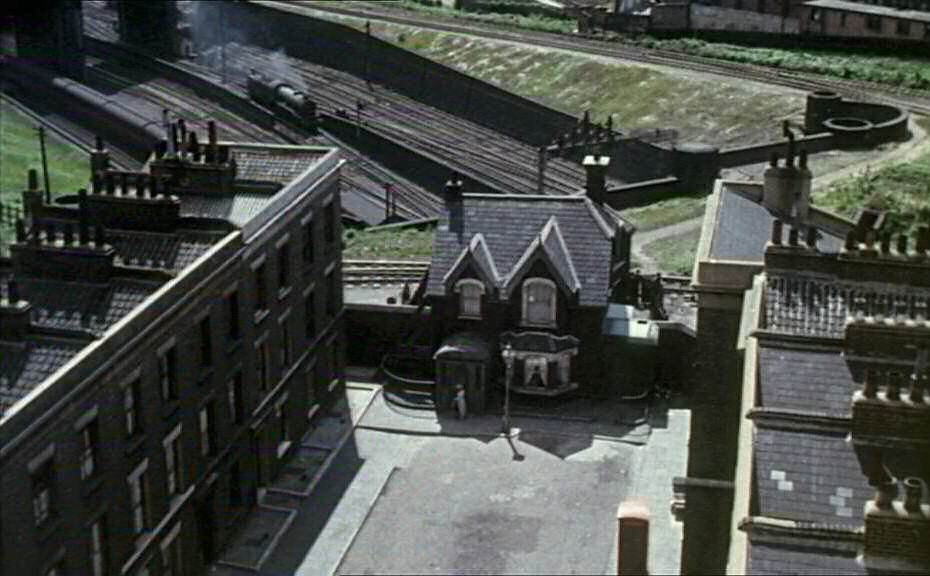
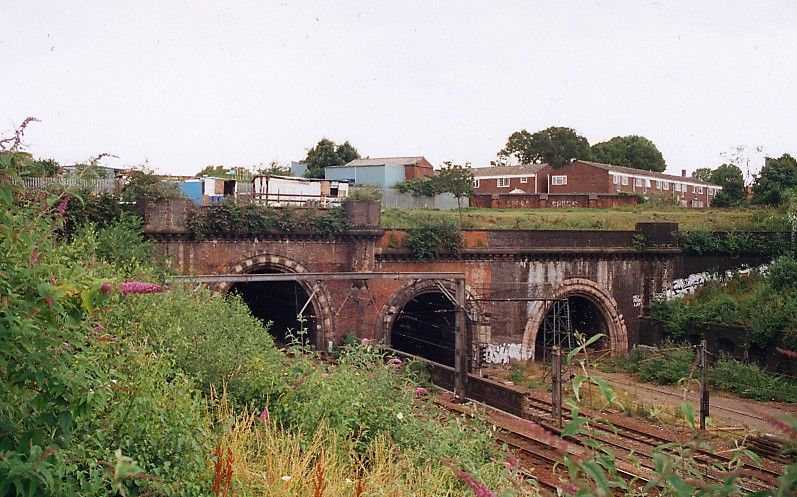
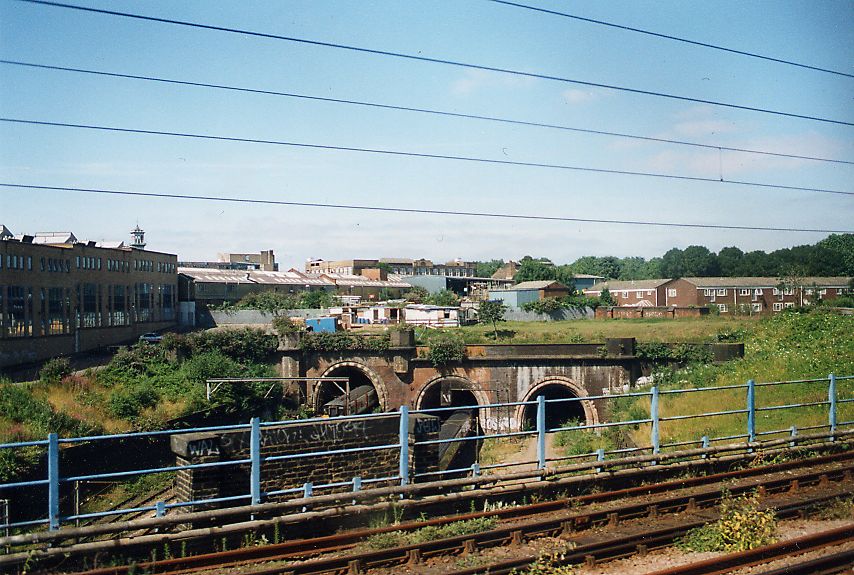
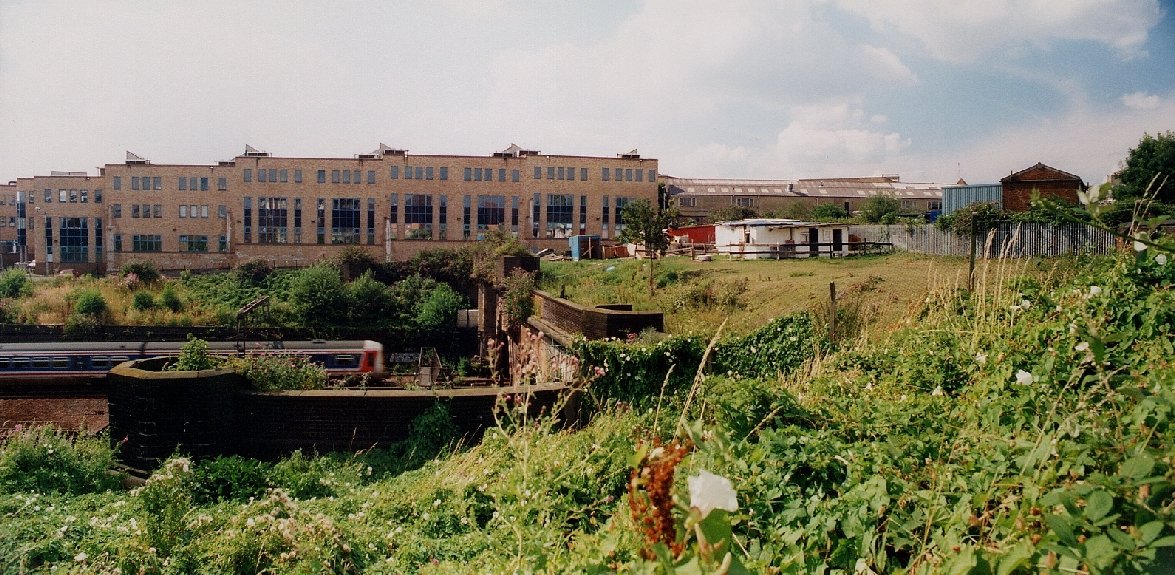
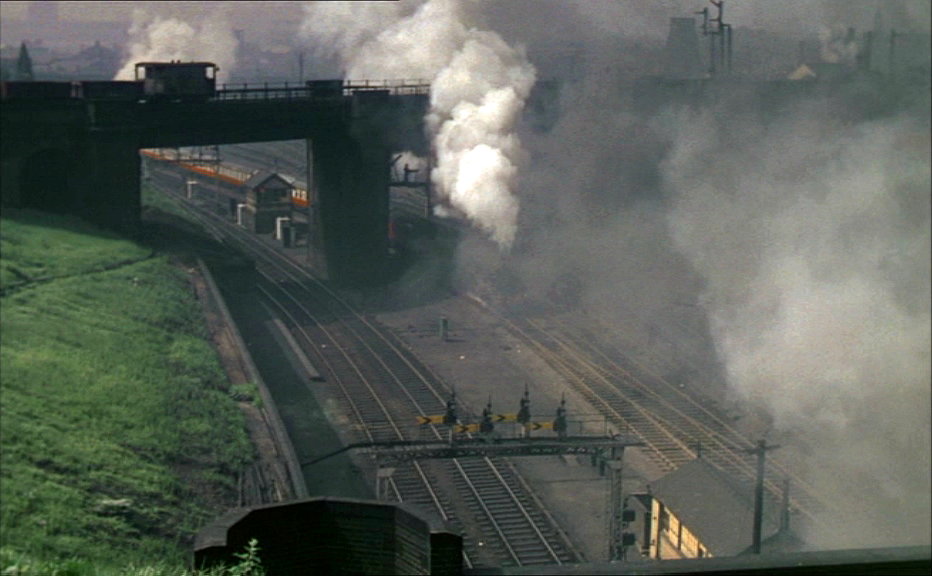
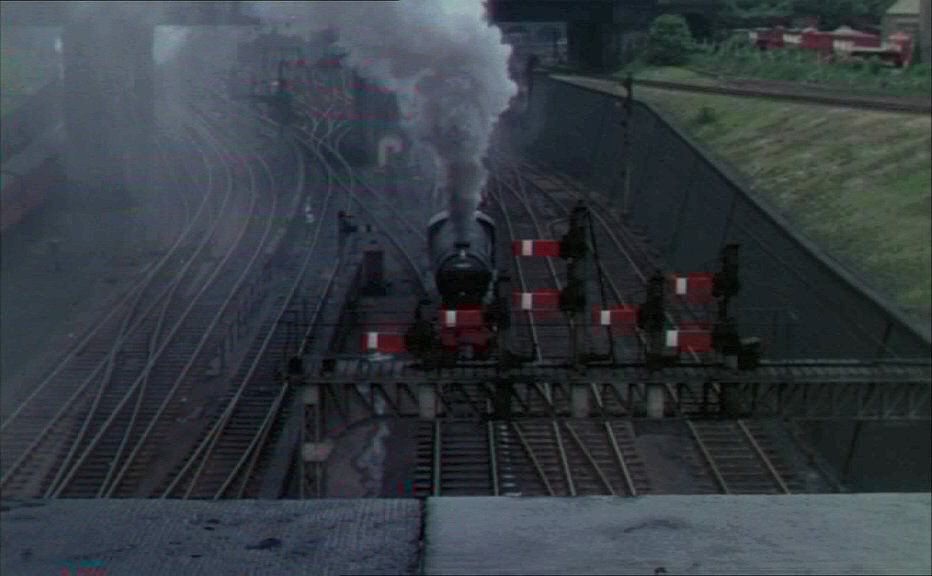
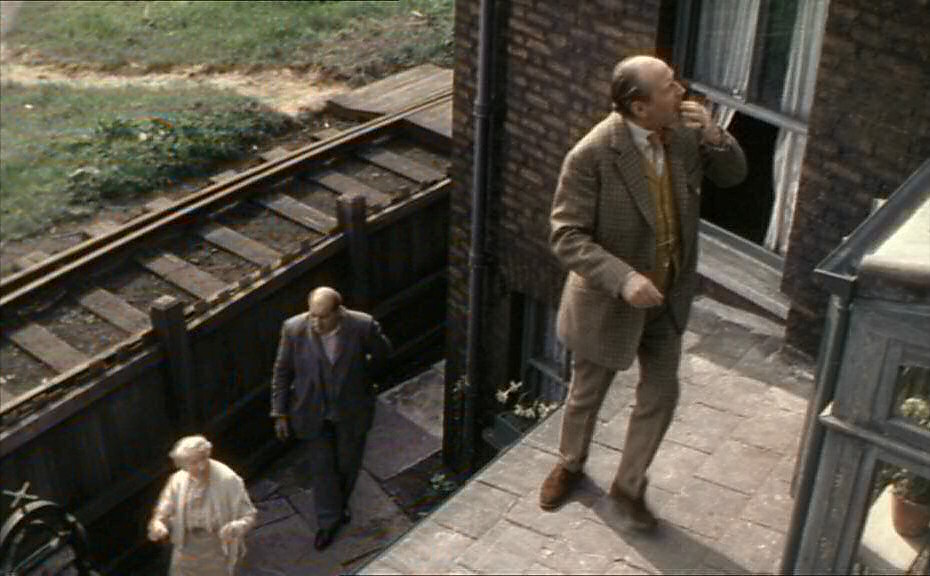
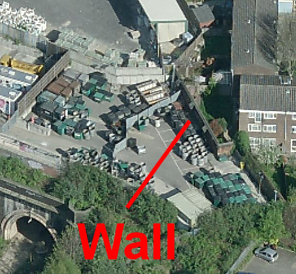
This is a smaller scale map of the area between King’s Cross and the southern end of Copenhagen Tunnel. Mrs Wilberforce’s house was a set that was specially built for the film, above the tunnel mouth at the western end of Frederica Street, off Caledonian Road. Although a small part of the eastern end of Frederica Street still exists, the area has changed out of all recognition and is now occupied by two housing estates dating from the 1960s and 1990s. Map reproduced by permission of Geographers’ A-Z Map Co. Ltd. © Crown Copyright 2007. All rights reserved. Licence number 100017302. See also street map (Streetmap) and the top-down and bird’s eye (oblique) aerial photographs (Bing) of the area around the southern mouth of Copenhagen Tunnel. The long grey roof just south of the North London Line is the place where the CTRL emerges from its tunnel under north London and runs above ground from here south-west to St Pancras station. On a zoomed-in oblique photo of the tunnel mouth, I've marked the position of the wall which is roughly where the front of Mrs Wilberforce’s house was.
|
|
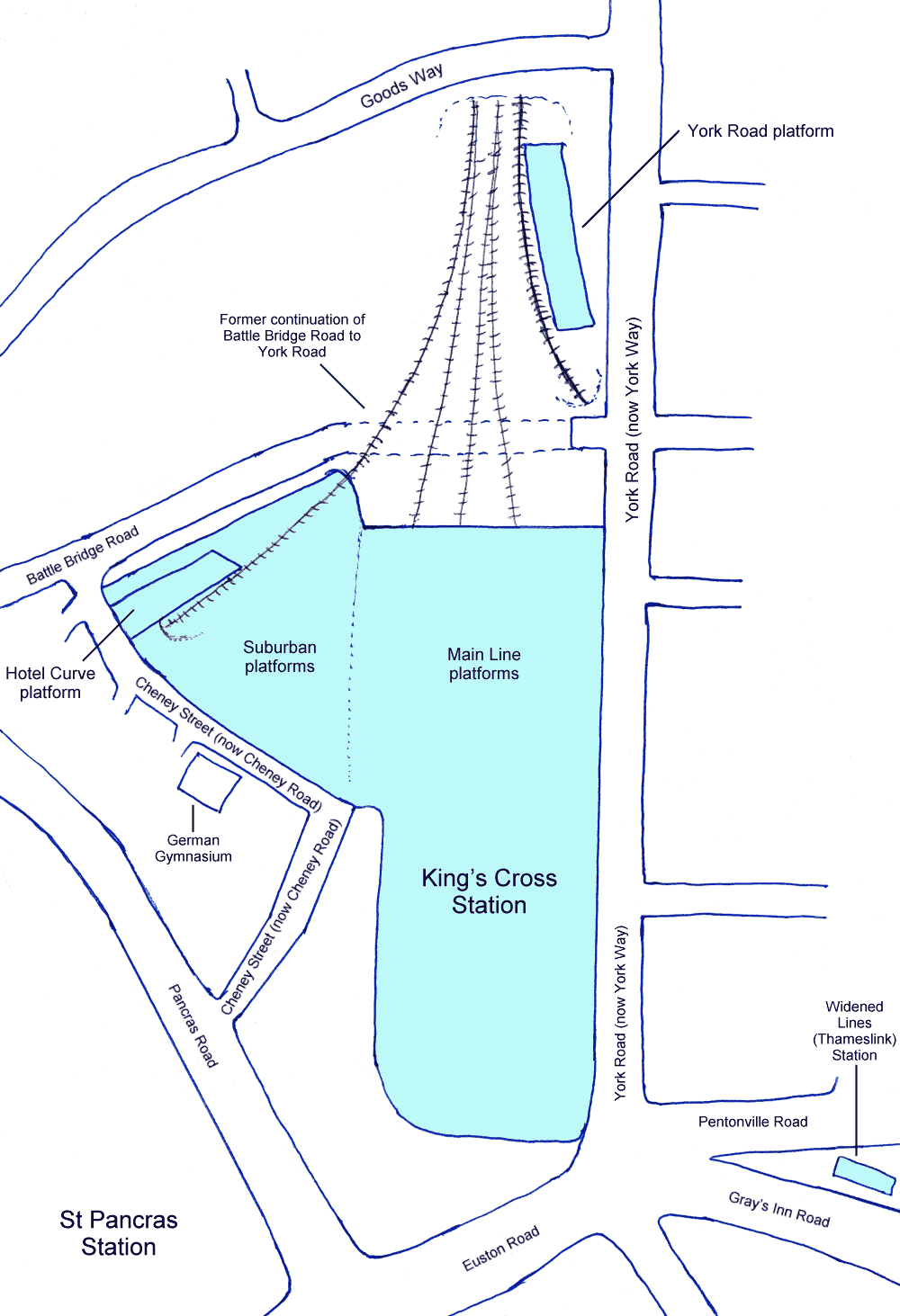
Here’s a sketch of King’s Cross station, based on the 1938 Ordnance Survey map that’s shown on page 21 of “Lost Lines: London”, Nigel Welbourn, Ian Allan Publishing, 1998, ISBN 0-7110-2623-8. It shows the York Road (southbound) and Hotel Curve (northbound) platforms on the link between the ECML and the Widened Lines (Thameslink). These links closed in 1976 when the Drayton Park – Moorgate line was handed over to British Rail, providing a more direct route between Finsbury Park and Moorgate. At one time, Battle Bridge Road extended on a viaduct across the tracks to link up with York Road, though this bridge had already been removed by 1938, long before “The Ladykillers” was filmed. |
|
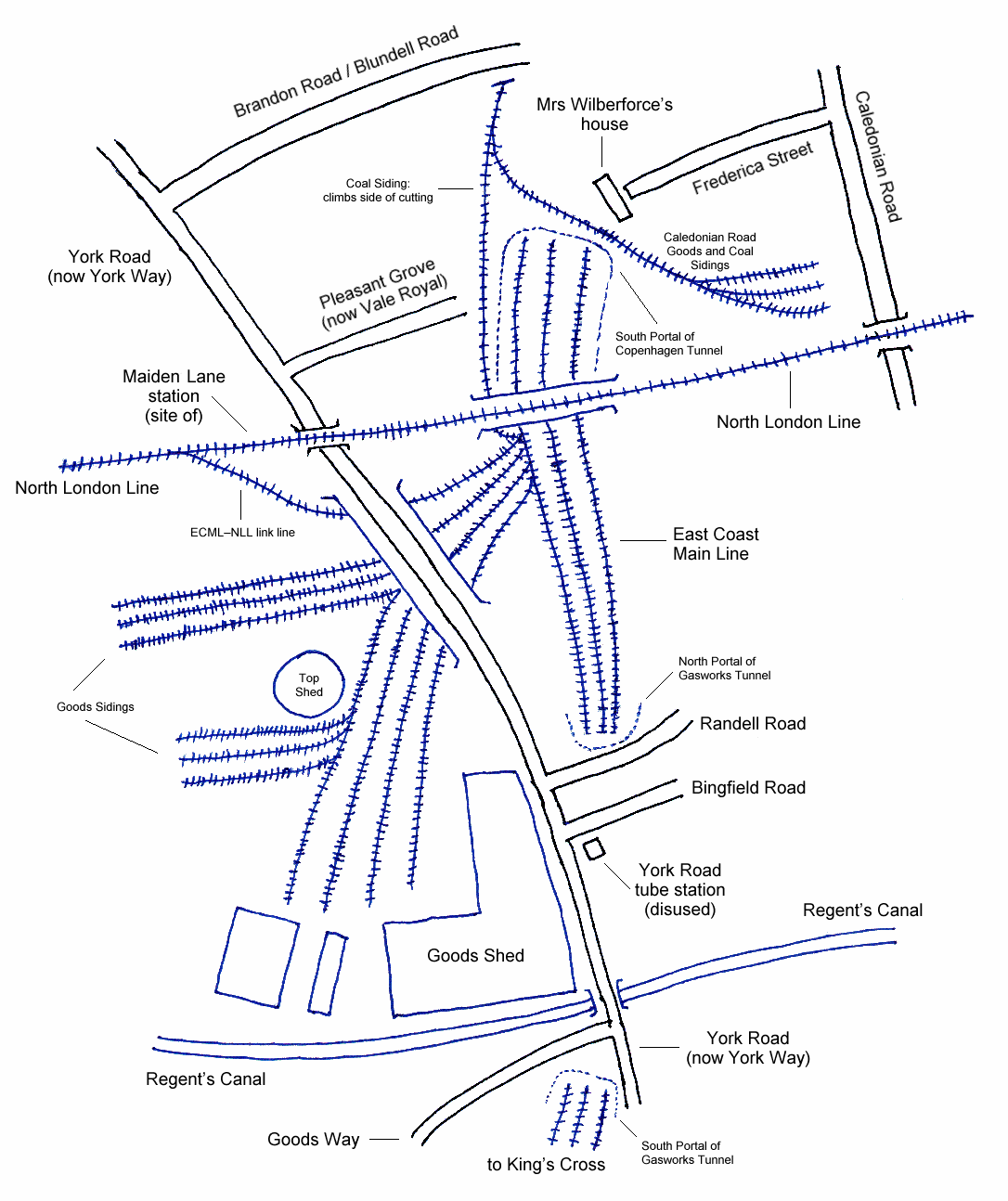
Here’s a sketch of the area to the north of King’s Cross station, based on the 1938 Ordnance Survey map that’s shown on page 21 of “Lost Lines: London”, Nigel Welbourn, Ian Allan Publishing, 1998, ISBN 0-7110-2623-8. For reasons of clarity, I’ve shown multiple tracks as a single ticked line; the many sidings which diverge from the main line and pass under York Road are only diagrammatic. Maiden Lane station (which still existed in 1938) on the NLL was immediately west of York Way, before the spur from the ECML joined the NLL. |
|
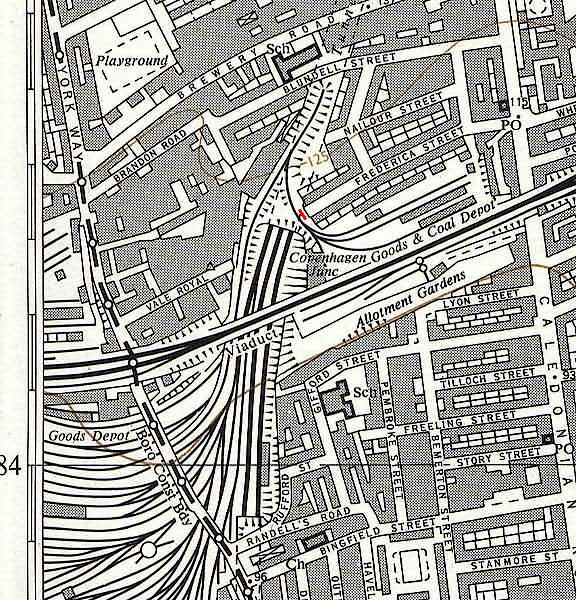
The coal siding still existed in 1966 when this 6"-to-the-mile (1:10560) Ordnance Survey map was made. Thanks to Donald Galt who scanned his copy of the map. I’ve marked in red the approximate position of Mrs Wilberforce’s house just beyond the wall at the end of Frederica Street. |
|
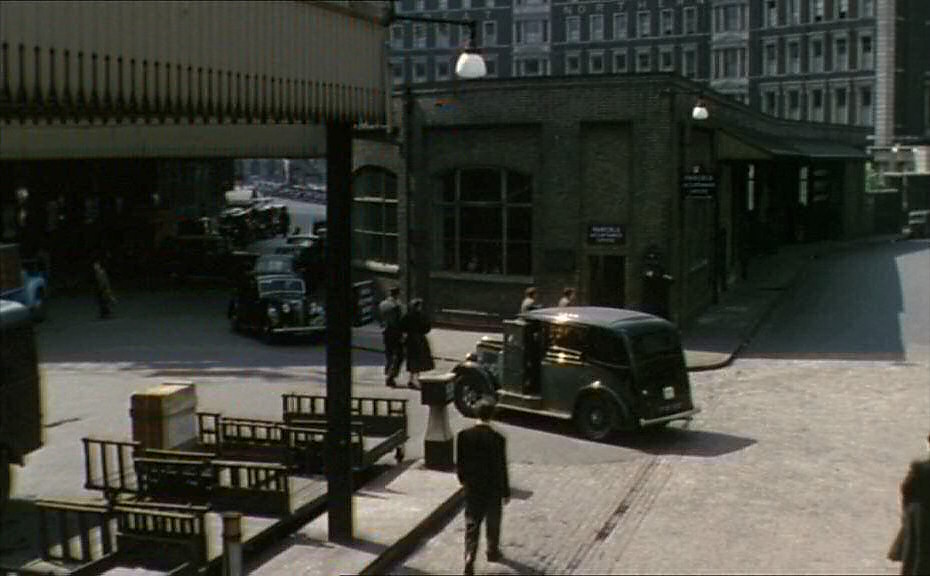
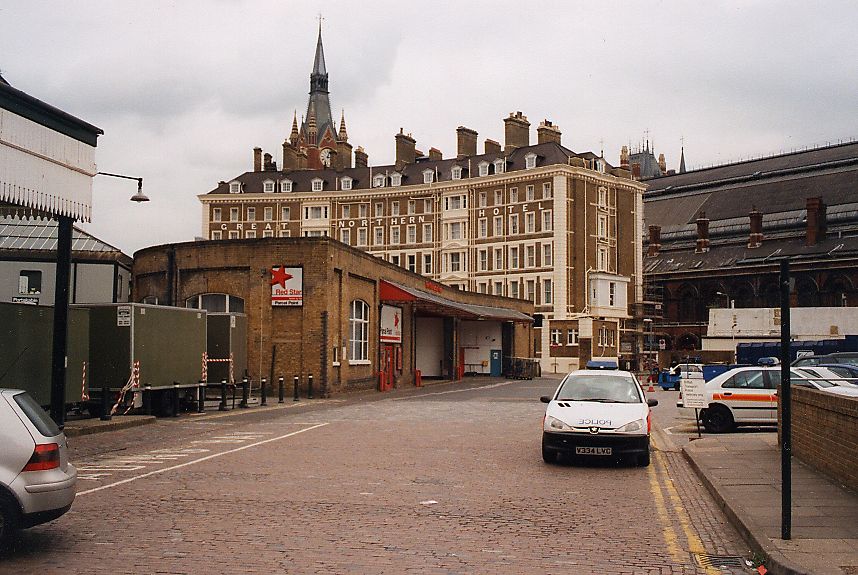
The security van containing the money turns left from Goods Way into Battle Bridge Road. A few seconds later, having been boxed-in by the silver car and the taxi, it turns right from Battle Bridge Road into Cheney Road. |
|
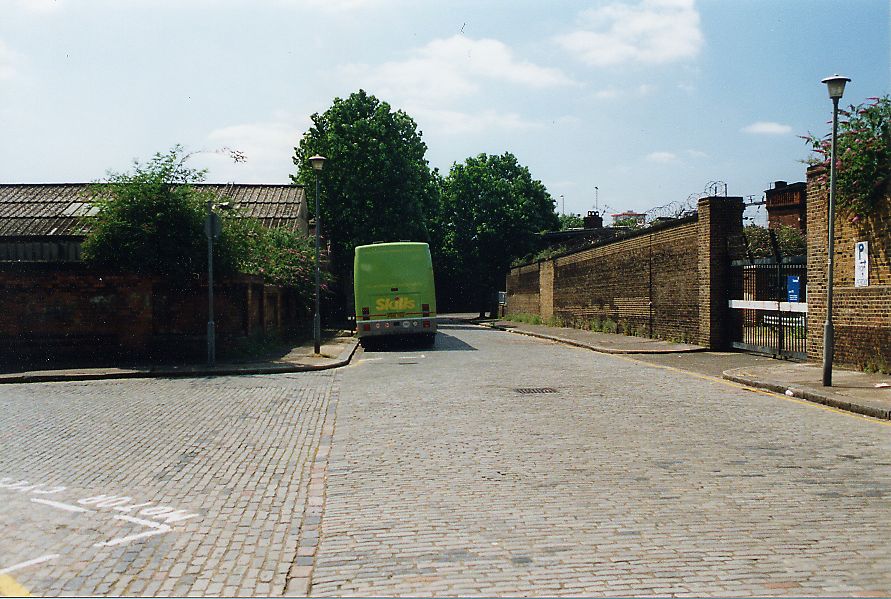
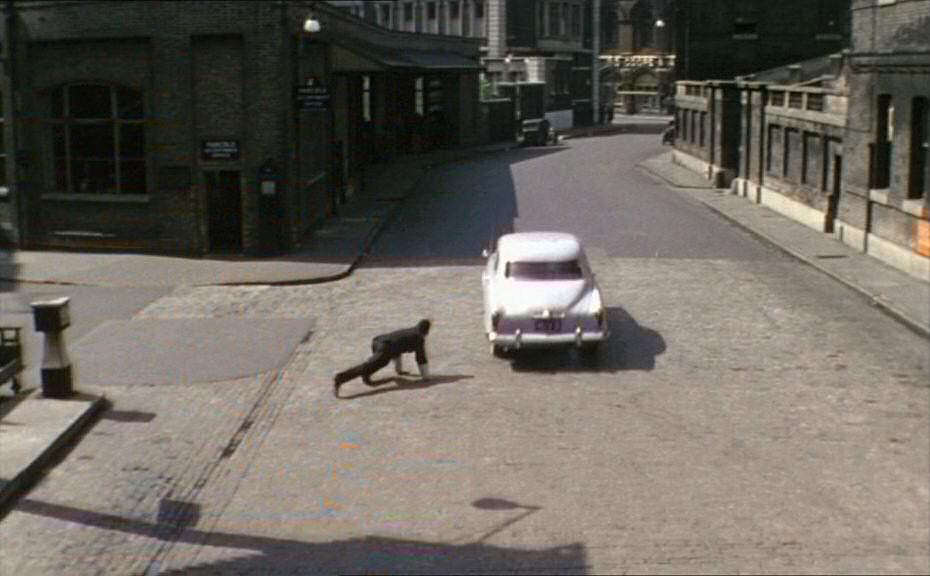
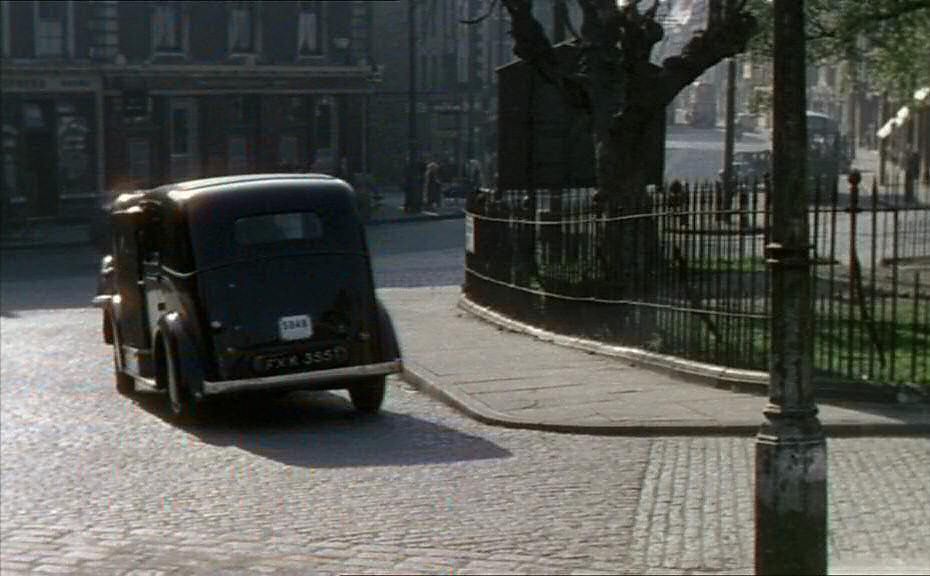
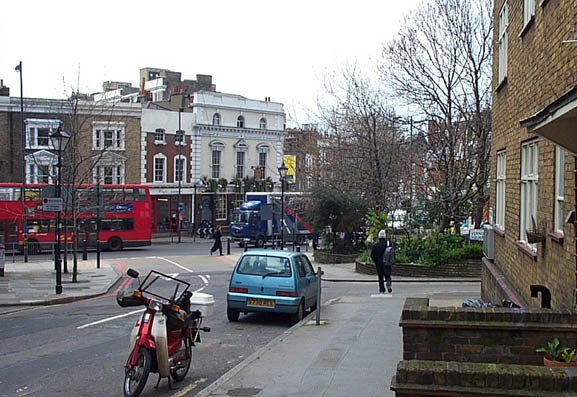
These two views are easily recognisable. The main change is the trees that have grown since 1955, obscuring the bridge in the distance carrying the Midland Main Line over St Pancras Road. |
|
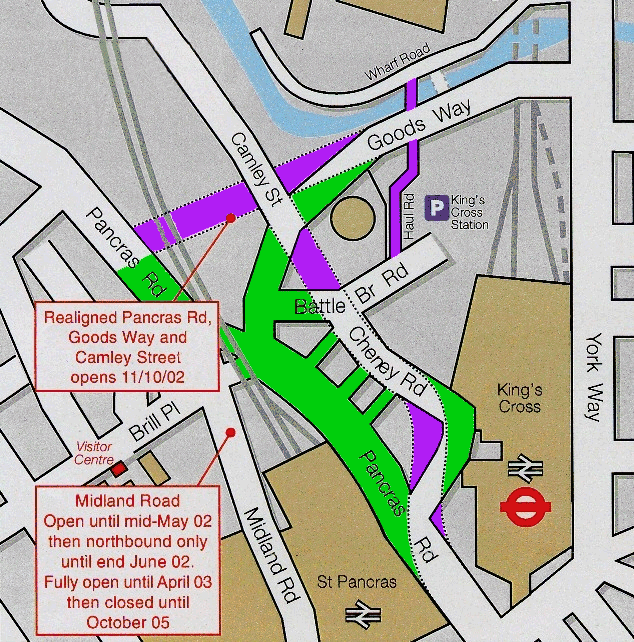
2 September 2002: This area is being redeveloped as part of the construction of the Channel Tunnel Rail Link (CTRL). This map is based on one produced by the CTRL Visitor Centre in Brill Place, north of the British Library. The green and purple areas (added by me) show, respectively, the existing roads that will be closed and the new roads that will be built. The additional platforms of St Pancras, which will be used by domestic services once the original platforms in the Barlow shed are used by the Eurostar trains, are being built in the area north of the existing station, in the area bounded by Midland Road to the west and Cheney Road in the east, on top of the old alignment of Pancras Road and the western end of Battle Bridge Road. The house that was on the right-hand side of the first 1955 picture still existed when I took the modern-day picture in July 2000, but has recently been demolished. Other recent CTRL changes are the demolition of the Milk Sidings and the Hotel Curve platform which used to be visible through a gateway in the high wall on the east side of Cheney Road, to the north-west of the suburban platforms. |
![]() |
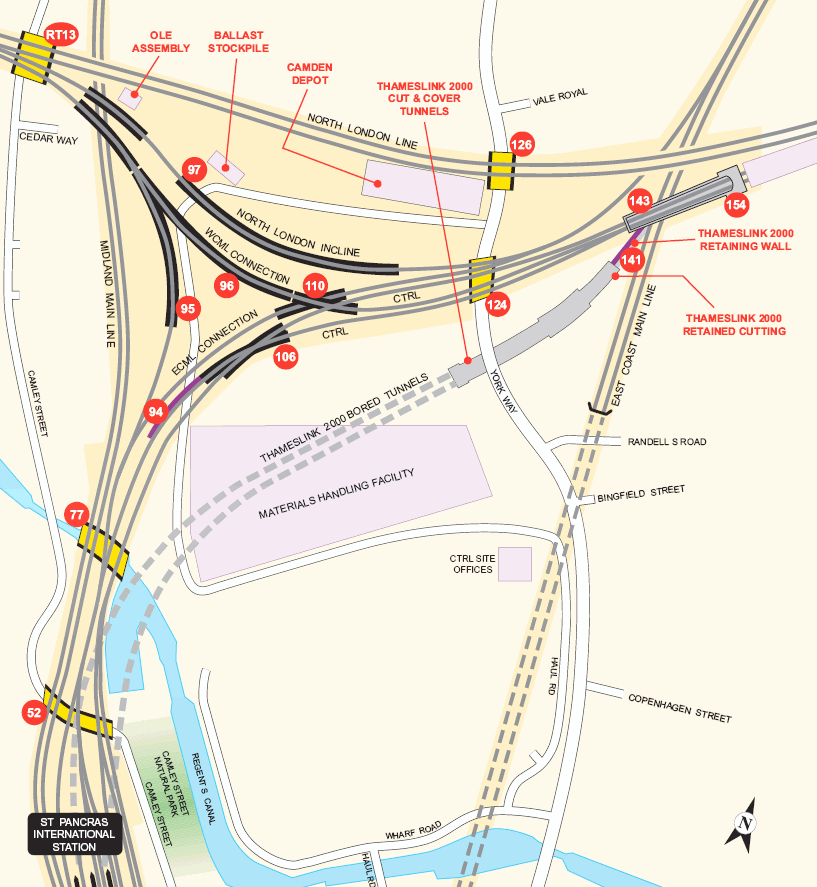
October 2005: This is a map of the new lines north of King’s Cross and St Pancras, including the CTRL and its connections to St Pancras and the North London Line (and hence the West Coast Main Line). The link between the Thameslink line and the East Coast Main Line is also shown: this will be used for Thameslink 2000. Notice that the ECML-to-NLL link, labelled “North London Incline”, now passes over York Way (“124” on the map) whereas the previous alignment passed under it. This is because York Way road viaduct has been demolished and the road lowered, now that access to all the goods sidings is no longer needed. I wonder if there are any other examples of a road-over-rail bridge which has become rail-over-road? The source of this map is http://www.ctrl.co.uk/flyers/contract.asp?ID=5442. |
|
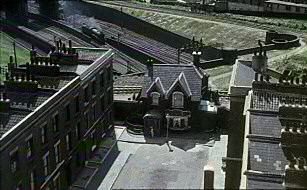
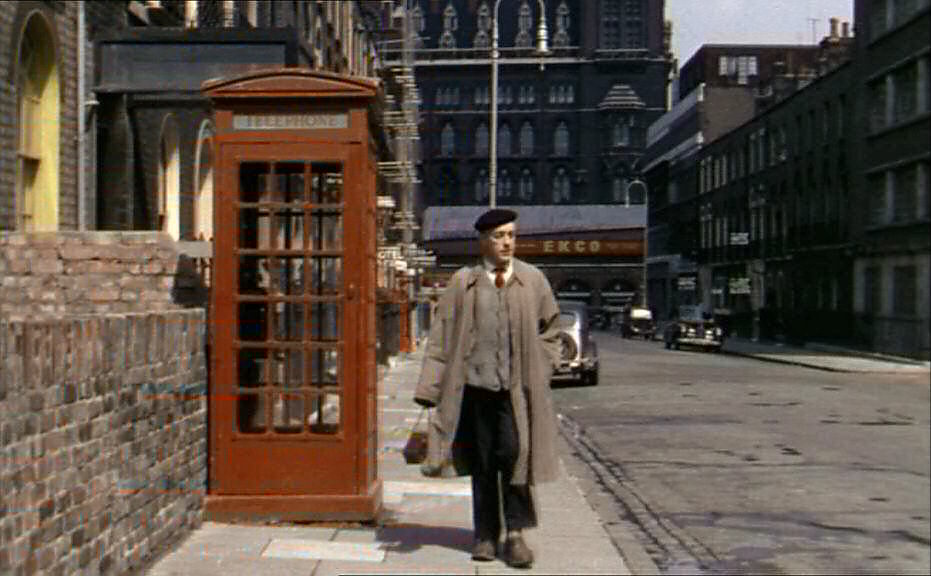
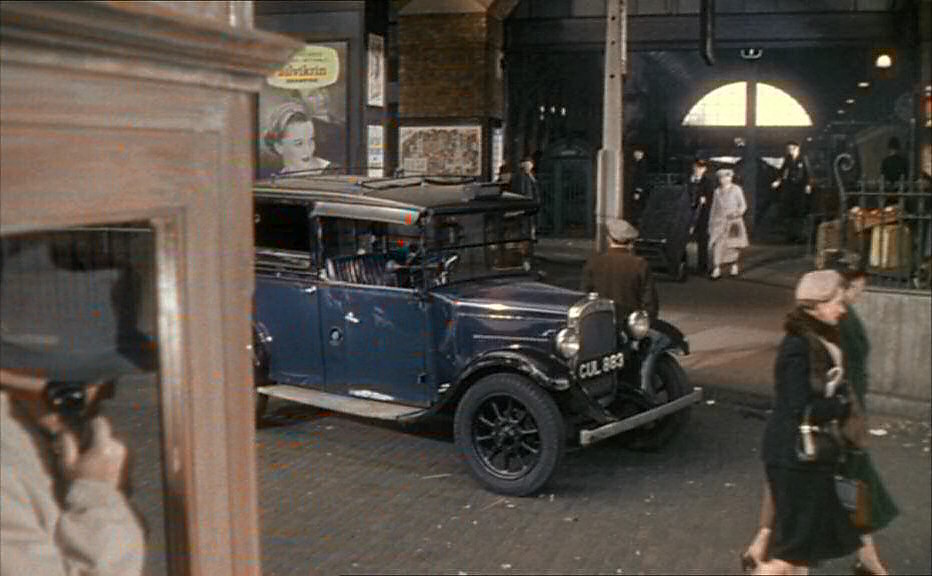
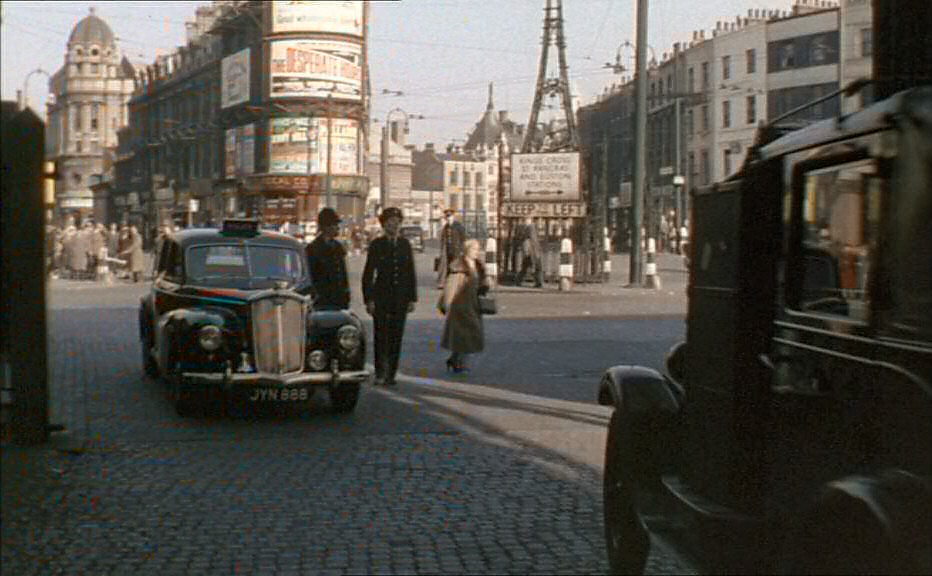
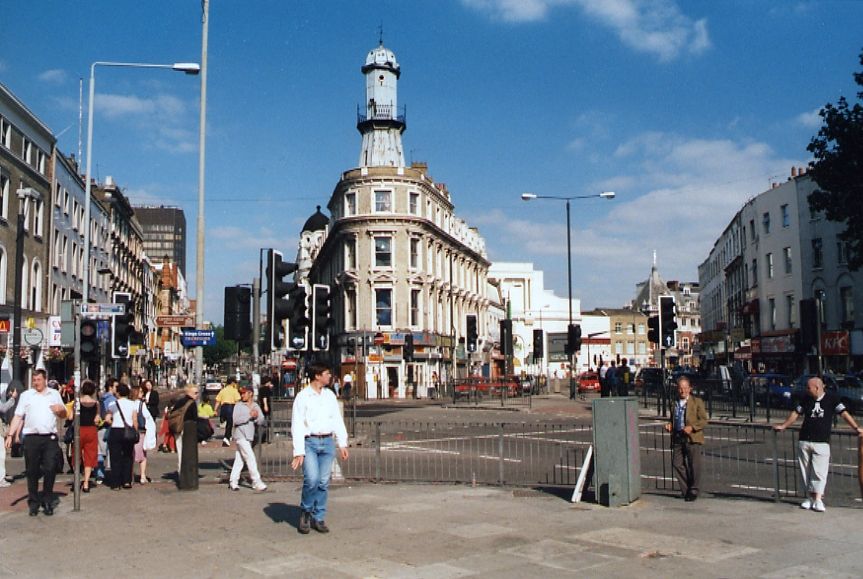
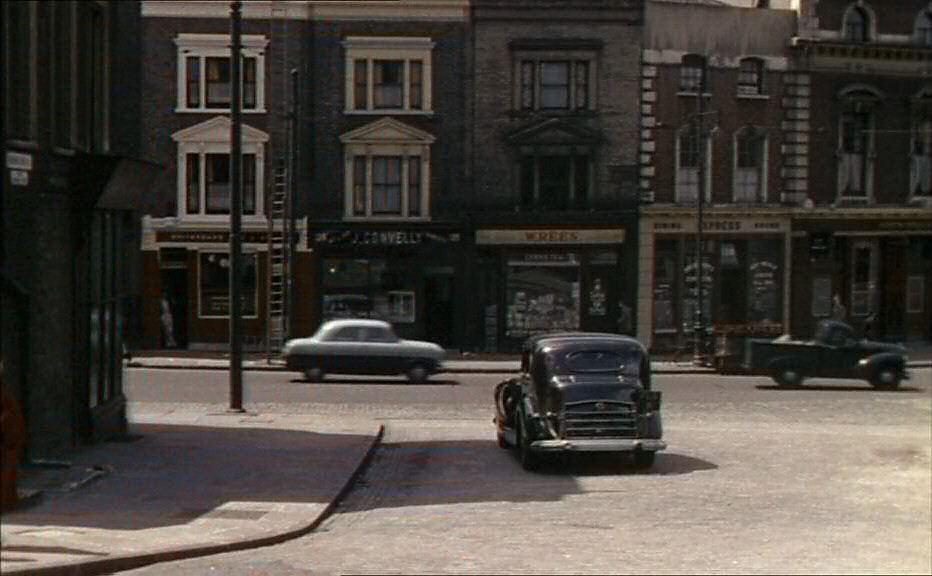
When Major Courtney is getting flustered while reporting Mrs Wilberforce’s movements, he is speaking to Professor Marcus who is in a phone box on Vernon Rise, south-east of King’s Cross Station. I didn’t grab any pictures of this scene – I must remember to do so next time the film is shown on television. However here are a couple of pictures of the same location from other times in the film. The main road in the background is King’s Cross Road. |
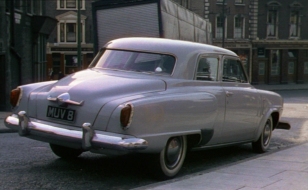
|
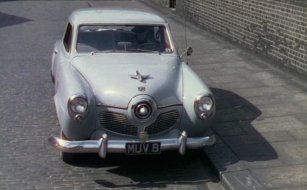
The area has changed considerably since 1955, but the buildings on King’s Cross Road are still easily recognisable. The woman in this picture is standing in roughly the same position as the lamp-post in the second picture from the film. Thanks to Eric Butler who sent me this photo. |
The images from the film are taken from a widescreen 15:9 DVD copy rather than from the 4:3 version shown on television. Many thanks to Skevos Mavros for sending me these pictures. Note that the DVD copy is still not a perfect copy of the original film: although it shows slightly more of the width of the frame, the height is slightly truncated compared with the 4:3 version. I’m not sure why the picture couldn’t have been zoomed out slightly to include all of the height, even if this meant slightly bigger left and right margins to fit the standard 16:9 DVD frame. The overall picture quality from the DVD is a vast improvement on my analogue captures from a VHS off-air copy of the film.

The distinctive silver car that Louis (Herbert Lom) drives is a 1950 Studebaker Champion Coupe built at South Bend Indiana and styled by Raymond Loewy.

The piece of music that the robbers pretended to practice at Mrs Wilberforce’s house while planning their robbery was the Minuet from “Quintet in E major, Opus 11, Number 5” by Luigi Boccherini.
Text © Martin Underwood, 1999–2019
Pictures © Ealing Studios / Rank Organisation, 1955; Ordnance Survey, 1966; Martin Underwood, July 2000; Eric Butler, April 2001
Page last modified: 10 May 2019, 09:46: Updated links to map (Streetmap) and aerial photos (Bing)